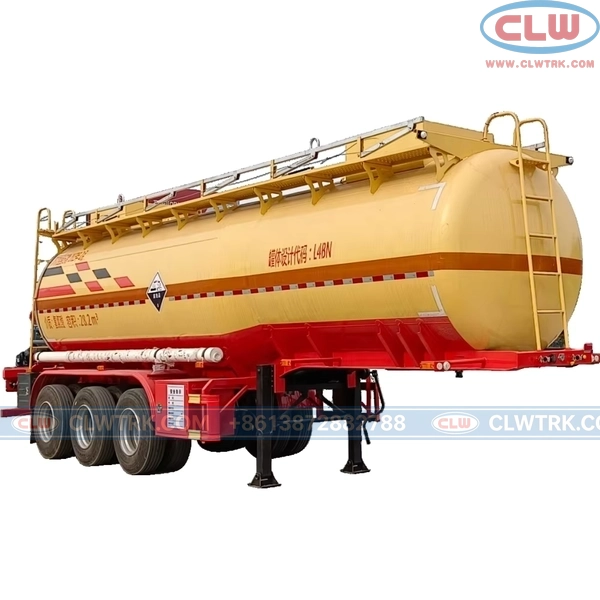
3-axle 30000L corrosive liquid tanker semi-trailer
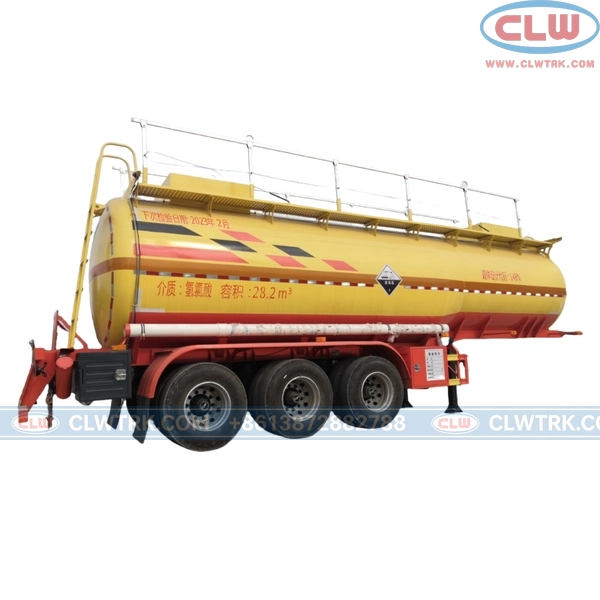
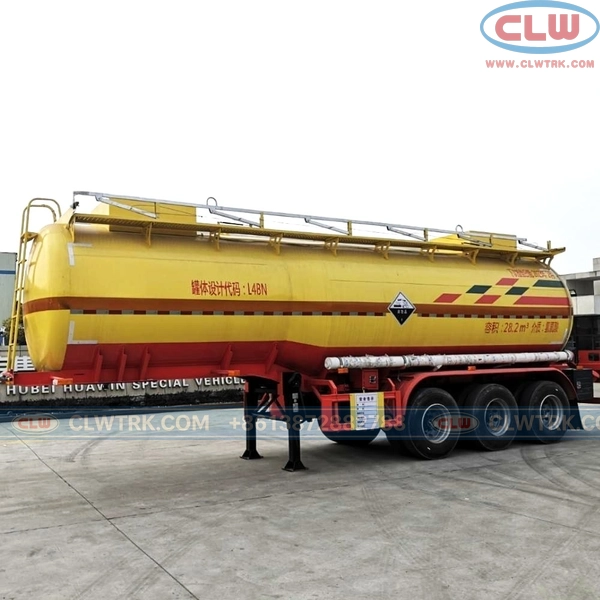
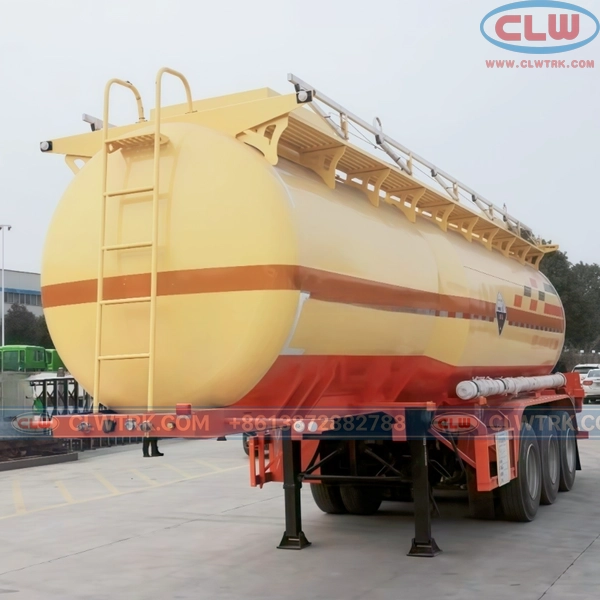
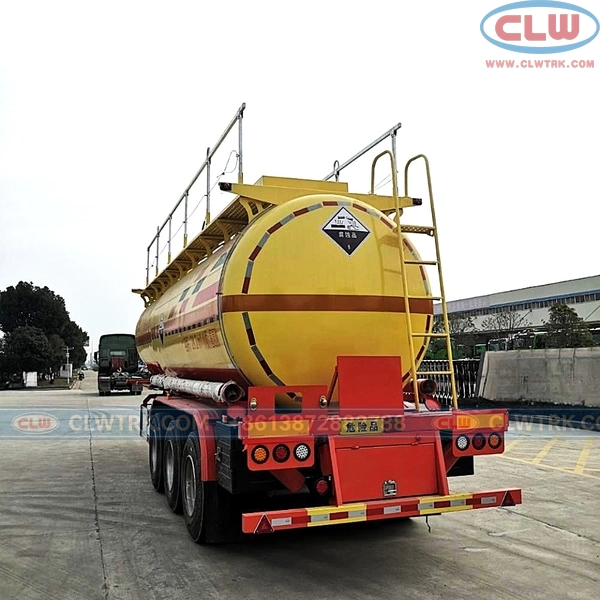
3-axle 30000L corrosive liquid tanker semi-trailer
This 3-axle 30,000-liter tanker is specially designed for the safe transportation of Class 8 corrosive substances.
The selection of tank material fully takes into account the corrosiveness, concentration, temperature and density of the chemical liquid.
Common tank materials include: carbon steel, manganese steel, aluminum alloy, titanium alloy, 304 stainless steel, 316 stainless steel, steel lined with PE (polyethylene), PP (polypropylene), PTFE (polytetrafluoroethylene), insulation materials, etc.
It can transport a wide range of chemical liquids, including sulfuric acid, hydrochloric acid, liquid caustic soda, nitric acid, hydrofluoric acid, ammonia water, hypochlorite solution, sodium hydroxide, potassium hydroxide, sodium hypochlorite, caustic soda, phosphoric acid, boric acid, aluminum chloride solution, formaldehyde, glacial acetic acid, acetic acid, acrylic acid, fluoroboric acid, propionic acid, ferric chloride solution, dichloromethane, fluorosilicic acid, trichloroacetic acid, hydroiodic acid, phthalic anhydride, maleic anhydride, titanium tetrachloride, chlorosulfonic acid, phosphorus trichloride, ethylenediamine, cyclohexylamine and other chemical liquids.
The vehicle is highly customizable. The tank can be independently compartmentalized as required to transport multiple chemical liquids simultaneously. Optional configurations include chemical pumps, mixers, and heating & insulation functions.
Our tankers comply with global and regional dangerous goods transportation regulations, including UN, IMO, ICAO, ADR, DOT and others, ensuring that the vehicle design meets relevant safety, environmental and classification requirements.
We provide customized solutions according to customer requirements, with a 2-year warranty and a global service network supporting 24-hour response.
Standard Configurations and Functions of Chemical Tanker Semi-Trailer
| Standard | Optional | |
| Brand | ||
| Place of Origin | ||
| Drive Type | ||
| Gross Weight | ||
| Curb Weight | ||
| Load Capacity | ||
| Overall Dimensions | ||
| Chassis Model | ||
| Emission Standard | ||
| Fuel Type | ||
| Engine Power | ||
| Transmission Type | ||
| Number of Axles | ||
| Axle Load | ||
| Number of Tires | ||
| Tire Model | ||
| Suspension Type | ||
| Braking System | ||
| Landing Leg Type | ||
| Number of Landing Legs | ||
| Tank Volume | ||
| Tank Material | ||
| Number of Manholes | ||
| Recommended Transport Media | ||
| Fire Extinguisher | ||
| Static Grounding Wire | ||
| Safety Valve | ||
| Breather Valve | ||
| Discharge Valve | ||
| Accessories | ||
| Remarks |
Dangerous Goods are Specifically Classified into the Following Categories
1. 第3类易燃液体(FL型车辆)
Acetone, adhesives, paint, varnish, alcohol, fragrance products, gasoline (petrol), diesel fuel, aviation fuel, heating oil, kerosene, resins, tar, turpentine, ethanol, benzene, butanol, isopropanol, methanol, octane, etc.
2. Class 5 Oxidizing Substances (OX type vehicles)
Hydrogen peroxide (aqueous solution), potassium permanganate, ammonium nitrate solution, potassium chlorate solution, with combustible substances (including carbon-based organic matter) not exceeding 0.2%. Relevant UN dangerous goods numbers include UN2426, UN3098, etc.
3. Class 8 Corrosive Substances (AT type vehicles)
Hypochlorite solution, hydrochloric acid, sulfuric acid, sodium hydroxide, potassium hydroxide, sodium hypochlorite, liquid caustic soda, ammonia water, muriatic acid, caustic soda, nitric acid, phosphoric acid, boric acid, aluminum chloride solution, hydrofluoric acid, formaldehyde, glacial acetic acid, acetic acid, acrylic acid, fluoroboric acid, propionic acid, hydrogen peroxide, ferric chloride solution, dichloromethane, fluorosilicic acid, trichloroacetic acid, hydroiodic acid, phthalic anhydride, maleic anhydride, titanium tetrachloride, chlorosulfonic acid, phosphorus trichloride, ethylenediamine, cyclohexylamine, etc.
4. Class 9 Miscellaneous Dangerous Goods
Wastewater containing hazardous waste specified in the National Hazardous Waste List (e.g., copper-containing waste, waste acid, waste alkali, nickel-containing waste). Relevant hazardous waste codes: HW18, HW21, HW22, HW23, HW27, HW33, HW34, HW35, HW46, etc.
5. Non-Dangerous Goods
Well washing fluid, fracturing fluid, water purifier, water reducer, cleaning agent, asphalt, hydraulic oil, edible oil, alcohol (beverage), milk, various liquid foods, etc.
Hazardous Chemical Storage Tanks & ISO Tank Containers
Due to the variety of stored media, storage tanks are available in multiple types, including above-ground tanks, underground tanks, semi-underground tanks, offshore tanks, subsea tanks, etc. Auxiliary facilities (including wind-resistant ring beams, locks, spiral stairs, guardrails, etc.) are made of ordinary carbon structural steel with low strength. Other parts and components are manufactured from appropriate materials based on specific applications. Commonly used domestic steels for tank production include 20#, 20R, 16Mn, 16MnR, and the Q235 series. Currently, the most widely used and technically mature storage tanks in China are dome roof tanks, floating roof tanks, and horizontal tanks.
Related Products
Related News
In the modern air transportation system, aircraft refueling trucks are essential key equipment to ensure the safe and efficient operation […]